

Rewind to the past: What is it Like to be a Part of Historical Formula 1 Racing Cars?
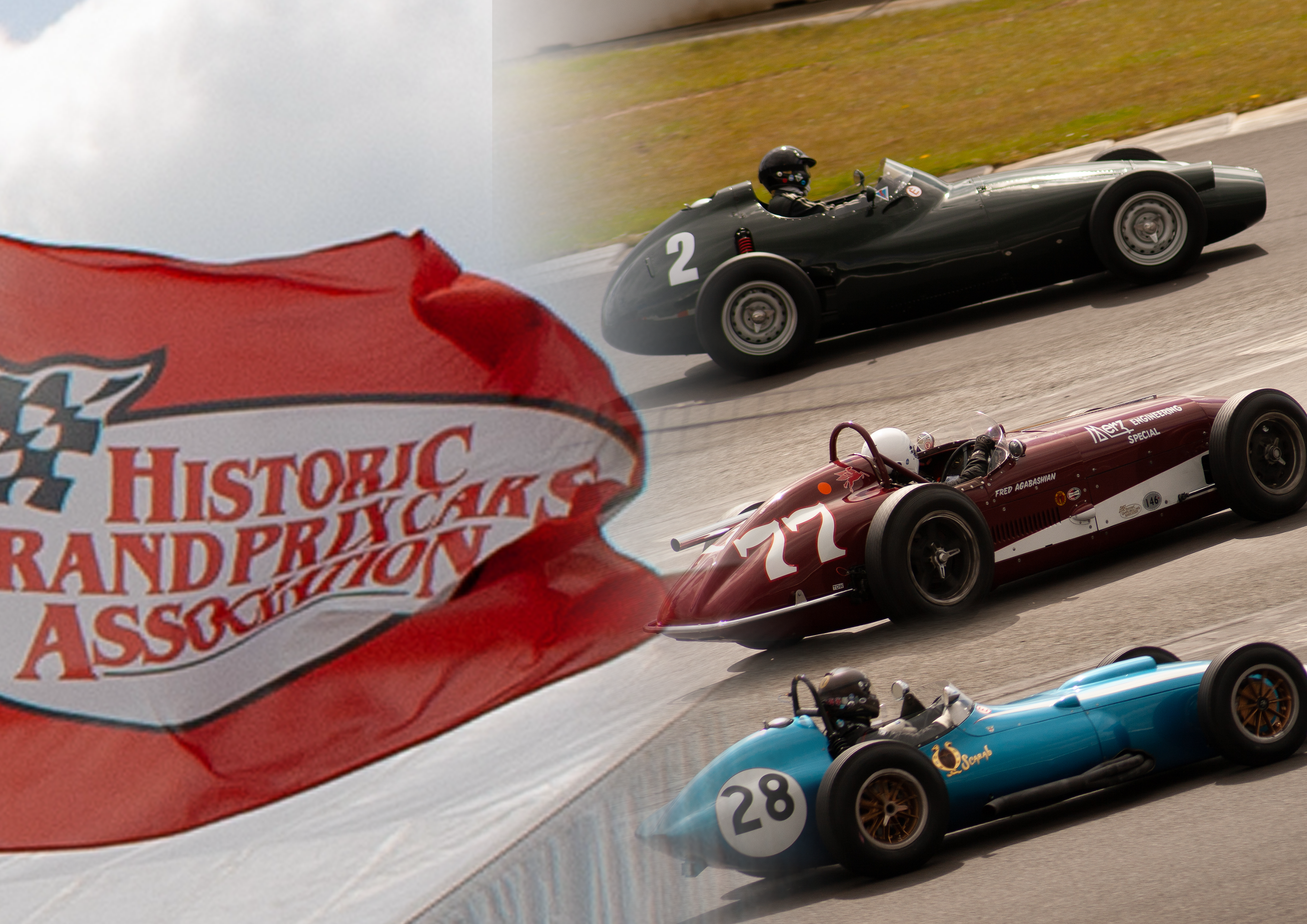
Maserati, Alfa Romeo, ERA, BRM, Cooper and Lotus, familiar with any of these names? Forgotten or unforgotten, the legacy of these cars Grand Prix cars throughout the 1920s and 1960s still exists among classical formula car racing enthusiasts in the Historic Grand Prix Car Association.
HGPCA was formed in 1979 when the historic Grand Prix movement emerged in Monte Carlo to celebrate the 50th anniversary of the famous Monaco Grand Prix by having the support race of historical Grand Prix cars.
In their 45 years of success, HGPCA visited more than 8 countries, including the famous Grand Prix circuit such as Brands Hatch’s Grand Prix circuit, Zandvoort in Holland, Italy’s Autodromo Enzo e Dino Ferrari at Imola, Nürburgring in Germany and Spa-Francorchamps in Belgium, and accumulating more than 120 competitors around the world.
Today, the historical Grand Prix cars are accessible to the public and anyone who has a ticket can feel, hear, watch and smell the legacy of historic Grand Prix cars.
“These are amazing cars” says Lindsey Warren, the Competition Secretary of the HGPCA. “we run cars from pre-Second World War, right through to 1966 and see all those cars able to go on the circuit, when most of us weren’t alive at the time is just wonderful.”
Spectators have the right to visit not only the grandstands but also an opportunity to visit the paddock without extra charge and the garage to inspect and take photographs or just get close to the cars. The atmosphere is relaxed and friendly compared to modern Formula 1 where everything is exclusive and costs at least 1000 pounds to enter.

On the 20th and 21st of April 2024, The season-opening race of the HGPCA: Historic Grand Prix Race Car Association was held at Silverstone, UK. From the young to the elderly, many people attended the event in Northamptonshire to watch the race and access the paddock to have a close look at the museum-worth cars. According to VSCC (the event helder), over 3000 people attended the venue and watch the historic cars running.
For the racing events, the HGPCA has traditionally taken grids of predominantly front-engined (Pre-1961, including smaller-capacity rear-engined machines) and exclusively rear-engined (Pre-1966) cars to Europe’s foremost historic events.
40 cars entered the HGPCA season opener among both the Pre-1961 race and the Pre-1966 race. Entrants are able to participate in four sessions including two races during the weekend.
Each machine is categorized into a smaller class after having been designated into each race. The class will be divided by each era when the machine was manufactured and how it was formulated- racing category, engine size, number of cylinders and the amount of engine displacement.
Walking up to garage number 9, 10 and 11, competitors, mechanics and machines are all crammed up, working on their cars to make the car competitive. A relaxed atmosphere surrounds the paddock as drivers and spectators chatter among each other about the setups and families with young children enjoy mingling with the cars.

An American business executive, Kurt DelBene was happy to have an interview with us. Kurt has travelled more than 4000 miles from home to visit his first-ever HGPCA event. Kurt owns and races a few other historical cars in the United States, such as Formula Atlantic cars (Originated from SCCA’s 1600cc Formula B, raced from the mid-1960s to late 1980s), and a 1960 Lola Mk1.
For HGPCA, he entered with BRP 64/2 from a 1964 Formula 1 machine, originally driven by Innes Ireland. At that time, Formula 1’s regulations manufactures to have one and a half litre displacements-eight cylinders, and a rear engine. This BRM B56 engine has fulfilled the regulations and is fitted on BRP 64/2.

Kurt also drives BRP 64/2 in the streets of Monaco to join the Historical Grand Prix in May. He mentioned how difficult and enjoyable to drive these Grand Prix cars which do not have any modern technologies.
The tyres that have been fitted to his BRP 64/2 are called Dunlop L sections which are the right tyres from the period. The Dunlops’ compounds are very hard and they don’t have traction, therefore the car is driven at its fastest when it is driven right on the edge of the cohesion.
Furthermore, the gearbox applied on the machine is BRM’s excellent six-speed transaxles are
“very stiff and chunky”. When downshifting these six-gear transaxles, the driver has to rev it just right to get a smooth downshift, so when the drivers go into the turns, and a lot going on, the driver does not have much cohesion,
“You’re always sliding a little bit, as you’re going around. so it’s a little intimidating for a car because you have to keep it on the edge to go fast” Kurt describes his “sometimes frustrating” machine and its driving style. “But the car is very capable and it’s a very quick car,” “It’s wonderful.”
Reminded or not, why not feel with your 5 senses the legacy of these cars still exists on the track in the Historic Grand Prix Car Association?


